October 16th, 2025
Eat Me, Drink Me: Marilyn Manson’s Bleeding-Heart Response to the Emo Era
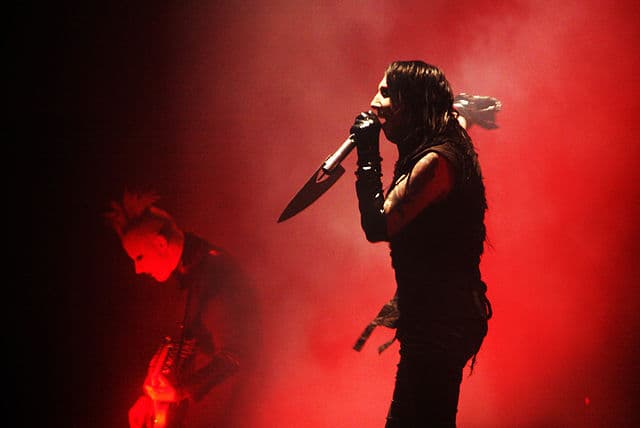
Eat Me, Drink Me: Marilyn Manson’s Bleeding-Heart Response to the Emo Era
By 2007, the eyeliner had changed hands. The world that Marilyn Manson once ruled in latex and menace had given way to a new generation of black-clad romantics. MySpace was the new church of darkness, and the congregation sang their heartbreak through bands like My Chemical Romance, The Used, and AFI. The mainstream had grown strangely comfortable with sadness — not as rebellion, but as confession. And just when everyone thought Manson had been outpaced by a softer, more emotional scene, he emerged withEat Me, Drink Me — a record that spoke to the emo generation in a voice only he could conjure: wounded, decadent, and strangely human.
• The Death of Shock, the Rise of Sincerity
At the end of the 1990s, Manson had been the ultimate cultural villain. He was America’s scapegoat, the self-styled Antichrist Superstar blamed for moral decay and school shootings. But by the mid-2000s, shock had lost its sting. The world had changed. Teenagers didn’t want to burn the church down anymore — they wanted to cry in the pews.
The emo movement wasn’t about tearing society apart; it was about surviving the feelings that came from being a part of it. Skinny jeans replaced PVC pants, heartbreak replaced outrage, and mascara replaced menace. Bands like Fall Out Boy and MCR were filling arenas with kids who felt broken — not by politics, but by love.
Manson, ever the chameleon, recognized the cultural shift. He could no longer be the monster outside the walls. If he wanted to stay relevant, he’d have to bleed with the audience, not for them. And so Eat Me, Drink Me became his strange metamorphosis — a gothic confessional written in the language of late-2000s emo.
• A Love Story Written in Scars
At its core, Eat Me, Drink Me is a heartbreak album. It’s also a love album, though a fractured one. Much of it was written during Manson’s tumultuous relationship with actress Evan Rachel Wood, a relationship that ignited tabloid frenzy and artistic rebirth in equal measure.
The album’s tone is rawer than anything he’d done before. Gone were the industrial snarls of Antichrist Superstar or the glam apocalypse ofMechanical Animals. In their place came something startlingly intimate: open guitar tones, bleeding melodies, and lyrics that confessed instead of condemned.
“If I Was Your Vampire,” the album’s opener, feels almost like a requiem. It’s slow, brooding, sensual — the sound of Manson peeling off his armor. “We built this tomb together, I will fill it alone…” he croons, half resigned, half seduced by his own pain. It’s gothic, yes, but not theatrical. There’s no sermon, no spectacle — just the sound of a man learning to ache again.
Songs like “Putting Holes in Happiness” and “You and Me and the Devil Makes 3” carry that same sense of twisted intimacy. The former is practically emo poetry — a melancholic surrender to loss wrapped in bleeding guitar lines. The latter reclaims Manson’s dark humor, as if to say: even in heartbreak, he still owns the darkness.
• When Goth Met Emo
To understand Eat Me, Drink Me as Manson’s response to the emo scene, you have to hear what’s missing as much as what’s there. The album isn’t built on rage or revolution — it’s built on the quiet aftermath.
Emo in the late 2000s thrived on vulnerability. Manson took that same vulnerability and filtered it through his gothic worldview. He didn’t mock the movement; he mirrored it. In songs like “Evidence” and “Just A Car Crash Away,” he gives us heartbreak dressed as horror, romance painted in blood. Where emo bands confessed their wounds with trembling sincerity, Manson dressed his in metaphors — vampires, crucifixes, and devils standing in for what everyone else was just calling love and pain.
It was his way of reclaiming the stage. The emo generation might have traded shock for sorrow, but Manson showed that sorrow could still be shocking — especially coming from someone who’d once made outrage his entire identity.
This is why Eat Me, Drink Me feels so pivotal now. It’s the intersection of two eras: the last gasp of the 1990s goth industrial aesthetic colliding with the emotional sincerity of the 2000s. Manson didn’t adapt to emo culture by imitation — he absorbed it, then alchemized it into something uniquely his own.
The Antichrist Turns Romantic — Manson’s Emo-Era Transformation in Full Bloom
• The Aesthetic Shift
Even Manson’s look during the Eat Me, Drink Me era reflected the changing mood. Gone was the militant glam of The Golden Age of Grotesque. In its place came a version of Manson who looked less like a rock villain and more like a dark romantic hero — black suits, red lighting, blood imagery, and his ever-present painted lips.
It was less about shock and more about seduction. He became the vampiric poet of the MySpace age — a figure who embodied heartbreak, not rebellion. Fans who’d grown up onThe Black Parade saw something familiar in him now. Theatrical pain had evolved, and Manson was evolving with it.
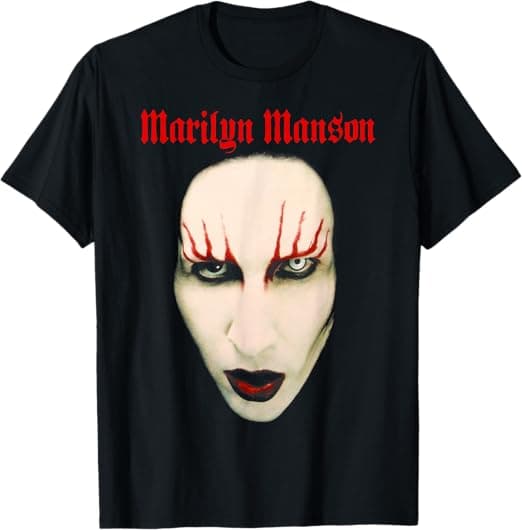
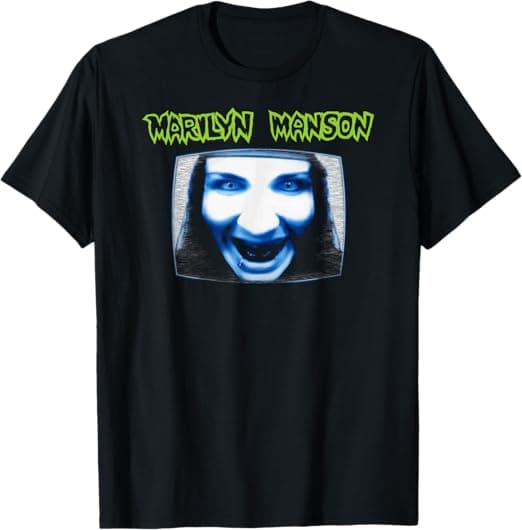
This is why vintage Eat Me, Drink Me tour tees are quietly resurfacing among collectors today. They capture that transitional moment — when gothic fashion bled into emo aesthetics, when heartbreak became its own kind of rebellion. The album’s artwork, full of deep reds and romantic decay, feels right at home beside today’s vintage My Chemical Romance or HIM shirts. It’s part of the same emotional wardrobe: beautiful misery as identity.
• Critics Didn’t Understand — But Time Did
When Eat Me, Drink Me first dropped, critics were split. Some accused Manson of going soft, others dismissed it as melodrama. But what they missed was that Manson was tapping into something honest. This wasn’t weakness — it was exhaustion. The performance of rage had run its course, and what was left was the man behind the makeup.
Listening now, the record feels prophetic. The 2000s emo wave paved the way for a new understanding of vulnerability in music — one that would later shape artists from Bring Me the Horizon to Billie Eilish. Manson, intentionally or not, helped build that bridge.
He’d been singing about pain for decades — the emo kids just gave it a new melody.Eat Me, Drink Me was Manson’s way of saying: “I’ve been where you are. I just bled in different colors.”
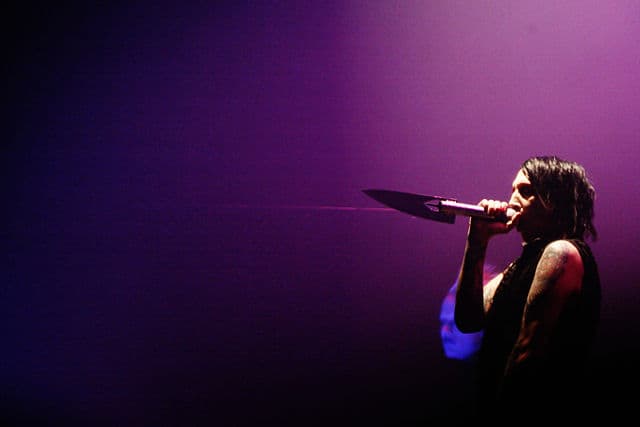
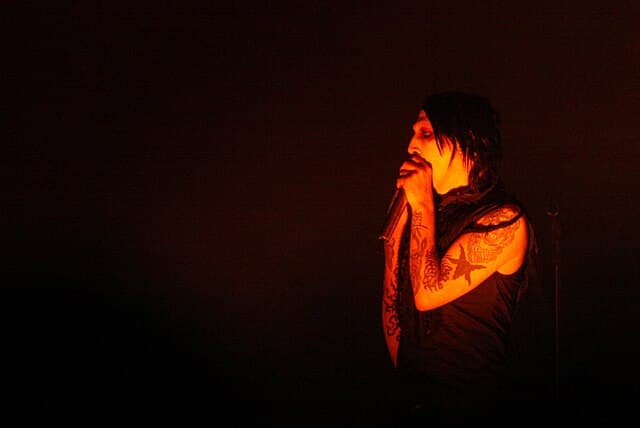
From Shock to Sorrow — Manson’s Vulnerable Side Shines on Stage
• The Legacy of Eat Me, Drink Me
Today, Eat Me, Drink Me stands as one of Manson’s most misunderstood yet strangely enduring works. It doesn’t scream like Antichrist Superstar or glitter like Mechanical Animals. Instead, it breathes — slow, seductive, and mournful. It’s an album that aches in real time, a dark mirror to an era when sadness finally found its voice.
In a sense, it was Manson’s surrender — but also his rebirth. He stopped trying to terrify the world and started simply trying to feel it. And for a brief, strange moment in 2007, Marilyn Manson and the emo generation met in the middle — eyeliner, heartbreak, and all.
That’s the magic of Eat Me, Drink Me: it’s where goth met emo, where outrage became intimacy, and where the once-great villain of rock learned that even monsters can mourn.
Latest Blog Posts
From Antichrist to Alien: How David Bowie Shaped Marilyn Manson’s Mechanical Animals
When Marilyn Manson unleashed Antichrist Superstar in 1996, he cemented his role as the ultimate rock-and-roll villain of the late ’90s. Brutal, chaotic, and nihilistic, the album was a manifesto of destruction—part industrial nightmare, part social commentary, and all rage...
When Marilyn Met Trent: The Florida Meeting That Catapulted Marilyn Manson's Career
Few moments in rock history feel as electric and transformative as the first encounter between two of industrial music’s most notorious figures: Marilyn Manson and Trent Reznor...